
Prepared by: Nabaz Mustafa
In a world where technology crosses borders at an unprecedented speed, the speech of Chinese President Xi Jinping at the 2026 World Artificial Intelligence Conference in Shanghai did not emerge merely as a technical roadmap, but rather manifested as a political and human philosophy for dealing with this new revolution.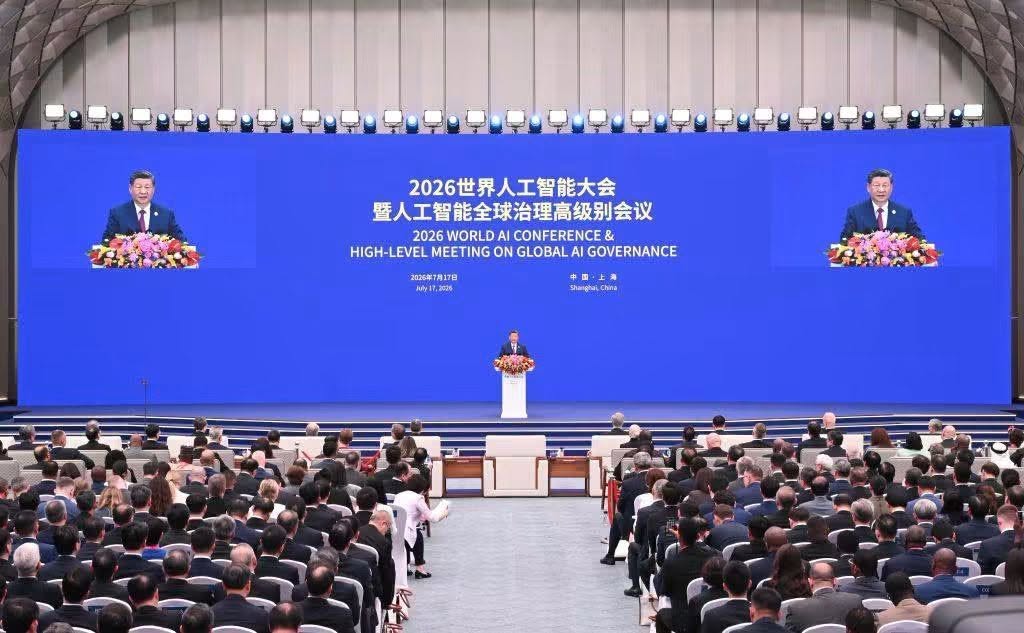
Through four fundamental observations, Xi Jinping attempts to create a balance between rapid progress and moral and political responsibility.
In the first theme, the Chinese President emphasizes the principle of cooperation for mutual benefit. This is a clear message to the world that AI should not become a tool for monopoly or for building walls around science. According to his vision, innovation reaches its peak when doors are open and information is shared; this perspective seeks to transform technology from a destructive competition into a global development tool where everyone is a winner.
On the other hand, the second observation refers to security and control. Here, Xi Jinping points to a major danger: that humans must not lose control over this power. However, at the same time, he warns against using the concept of "national security" as a pretext to hinder other countries and disrupt their growth. This is a delicate balance between protecting humanity from the risks of AI and preventing the use of security as a political weapon.
One of the deepest dimensions of this vision is the preservation of harmony and civilizational diversity. Xi Jinping warns that AI must not lead to the erasure of cultural identities in an era where the risk of homogenizing the world through algorithms is present. China calls for respect for the peculiarities of each nation and civilization so that technology serves to enrich cultures rather than destroy them.
President Xi Jinping sends a humanitarian and just message to the Global South (developing countries). He calls for digital divides not to lead to a new historical oppression. He demands a central role for the United Nations to ensure that AI governance is fair and that poor countries do not become victims of this progress.
His message is a vision for the year 2026, an attempt to define AI as a public good for humanity, where technology serves peace, justice, and the protection of human dignity, rather than becoming a tool for deepening international conflicts