
Nabaz Mustafa
Director of the Global Civilization Initiative Research Center
Introduction
Within the framework of international efforts to understand the philosophy of Chinese development and modernization, and upon an official invitation from the International Department of the Central Committee of the Communist Party of China, I conducted—in my capacity as the Director of the Global Civilization Initiative Research Center—a scientific and field visit to the People's Republic of China. The primary objective of this visit was to participate in a series of meetings, intellectual activities, and international seminars to delve deeper into China’s rare experience in overcoming poverty and transforming marginalized areas into centers of economic growth.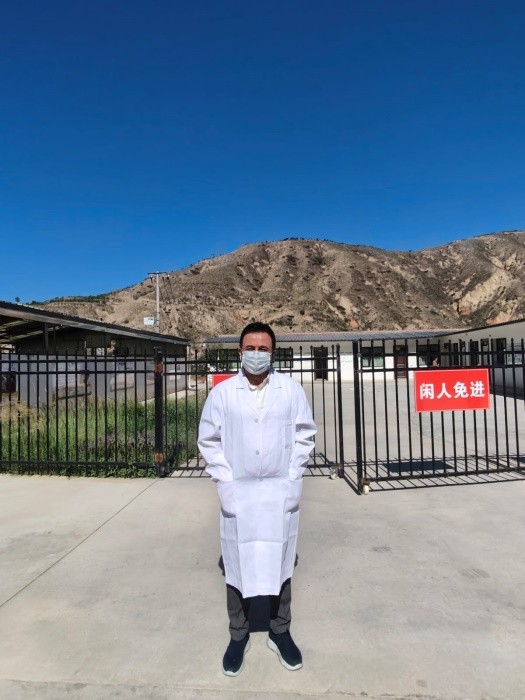
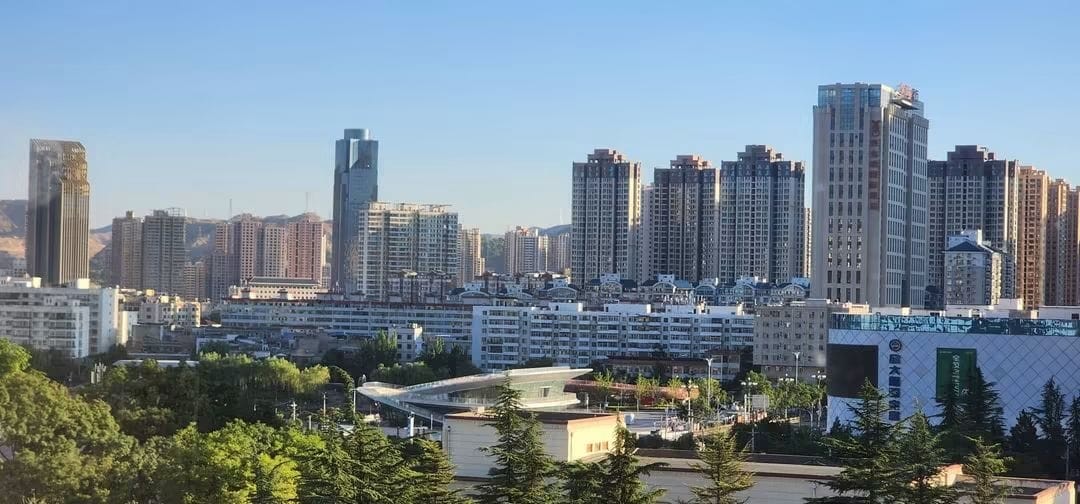
After a journey lasting more than 15 hours and changing three planes, I arrived in Gansu Province and the city of Ningxia. Although I have visited major centers such as Beijing, Shanghai, and Wuhan several times before, this time I encountered a different image of modernization. What caught my attention in Gansu was the unique balance between technological progress and the preservation of cultural identity. In this region, modern buildings did not erase the environment; rather, the colorful mountains (red, yellow, and orange) and rivers remained an integral part of the city’s features and neighbors to the skyscrapers. This region, once known as the trade and economic route of the Silk Road, has maintained a living tableau of peaceful coexistence among various nationalities and religions, where the past and the future meet at a single point. This is the special Chinese model in which humans, the environment, and technology are integrated.
Bulangou Village... From the Verge of Extinction to Life
We began our field coverage in Bulangou Village in the Dongxiang region, which is about two and a half hours away from the city center.
Before entering the village, I visited a modern farm dedicated to raising the village’s livestock, where villagers previously raised their animals individually and using primitive methods. Before entering, and behind a set of health procedures including wearing special clothes, we were able to enter the farm after passing through a disinfectant spray device as a preventive measure. 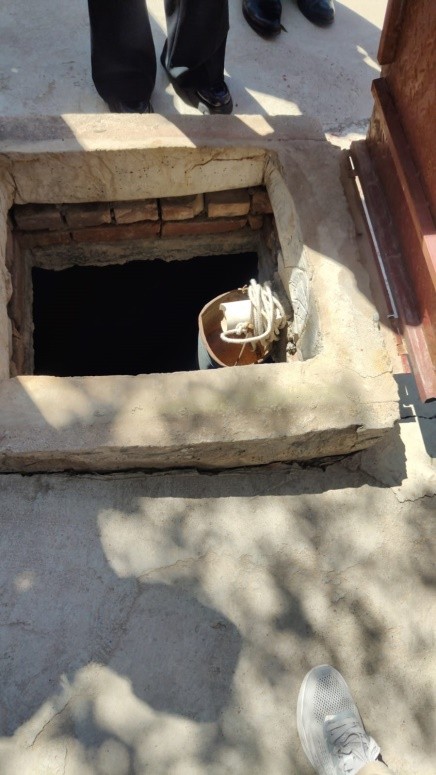
We saw how the livestock breeding process in this facility passes through different stages while maintaining complete cleanliness. All sheep are vaccinated by the government for free. What impressed me was that the sheep are insured by the government; if a head of sheep dies, the government compensates the farmer. There was an administration made up of the village people to manage the livestock of all residents. I understood that the government established an electronic platform for marketing, allowing them to sell their meat and products directly to major cities without intermediaries.
Then we headed to Bulangou Village. Until 2013, this village was a symbol of extreme poverty—a rugged mountainous area with no roads and no clean drinking water. People relied on collecting rainwater, and I personally visited that pit (shown in the picture) which resembles an underground well. That water was not used only for drinking, but for all needs, and it was reused several times. Even agriculture was small and limited due to the ruggedness and water scarcity, to the point that villagers could not deliver their products to city markets, so they settled for what barely kept them alive (such as wheat and potatoes).
 |
 |
I learned there that the annual per capita income at that time was only 1,600 Yuan (about $220), which is less than $20 a month—well below the international poverty line.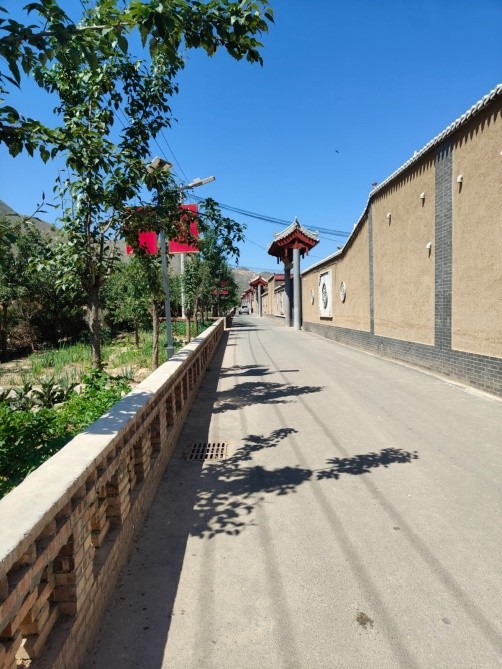
Their houses consisted of two small rooms made of mud, and there was no school; instead, they used one or two rooms to teach the Chinese language for only three primary stages, and children could not even obtain a good education.
The Historical Transformation... When Thought Becomes Field Action
The year 2013 was a turning point thanks to the announcement of the “Targeted Poverty Alleviation” policy by the Chinese government. On February 3, 2013, Mr. Xi Jinping, General Secretary of the Communist Party of China, visited this village just a few months after taking office. Despite the ruggedness of the road and the warnings, he insisted on reaching the heart of the people’s suffering by bus and on foot. That visit was not just a political message; the Chinese President wanted to prove, through the Party’s philosophy, how the progress of his country transforms from an idea into field action to change human lives. His message to officials was clear: “If I can reach here, there is no obstacle to delivering services to these people.”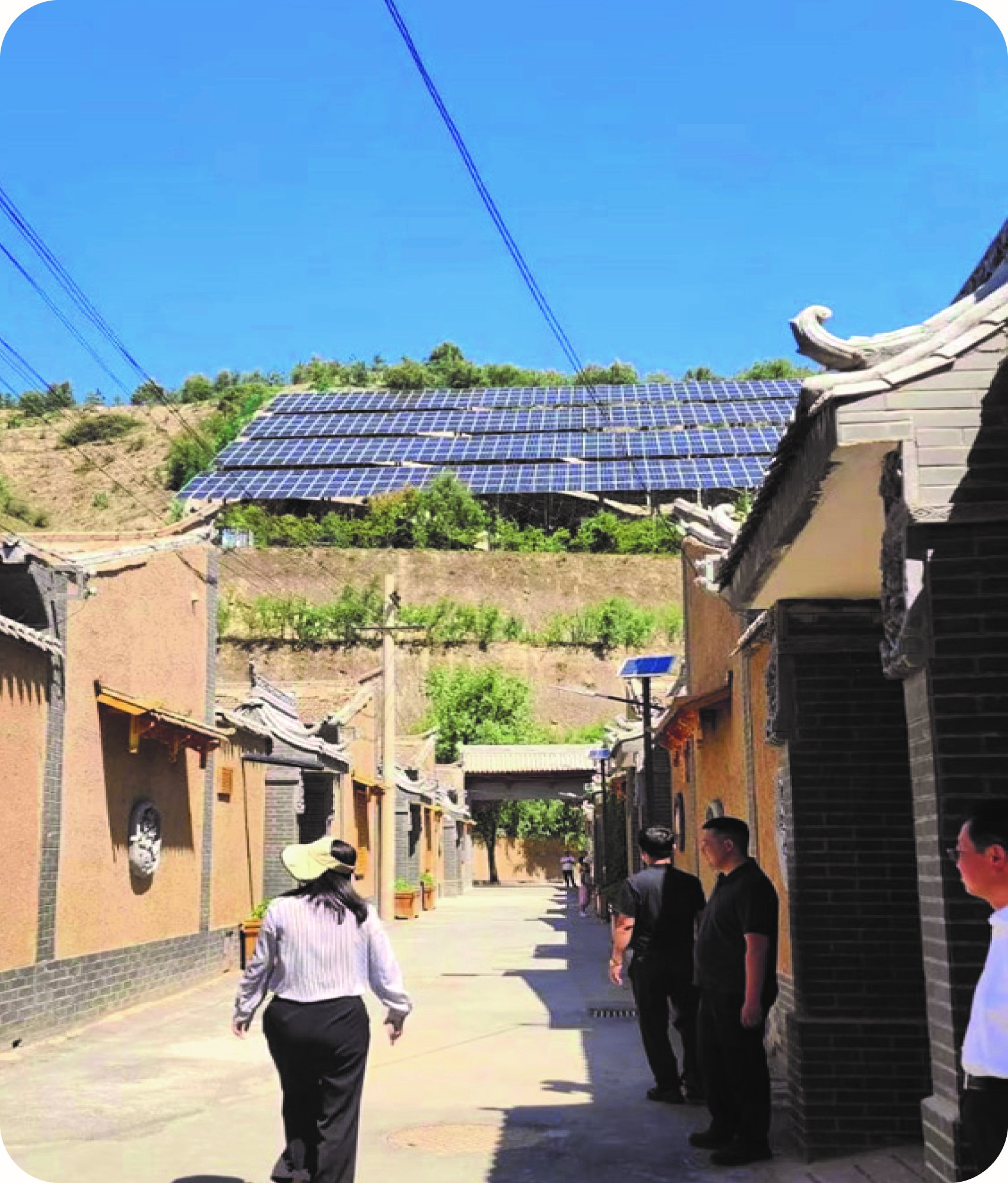
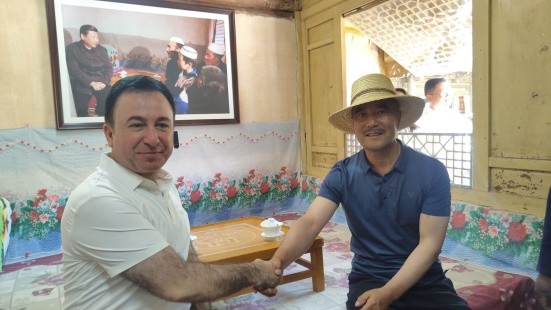
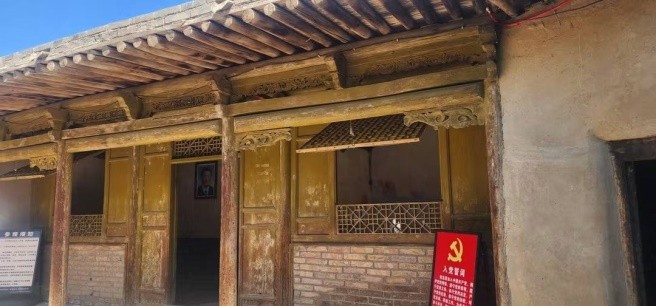
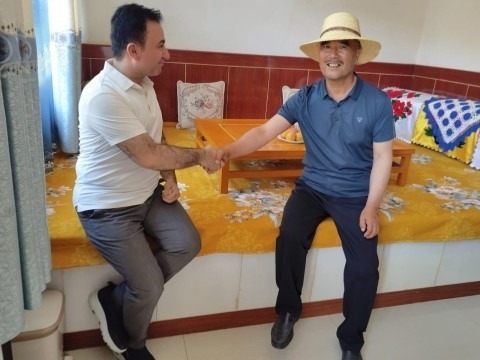
Therefore, he visited the first house in the village, which has now become a museum symbolizing China’s victory over poverty. He sat there with the homeowner and drank from the salty rainwater to understand the pain of the village people. Photos show him shaking hands with the family and discussing their living conditions. Fortunately, the same person visited by President Xi Jinping is the one now maintaining his home, which has been turned into a museum.
I had the honor of visiting that old house and shaking hands with the same respectable man who welcomed the President in 2013 in his small home. When I said to him through the translator, “You are a lucky person because the president of your country visited you and shook your hand,” he confirmed with a smile full of hope, saying: “Yes, yes.”
 |
 |
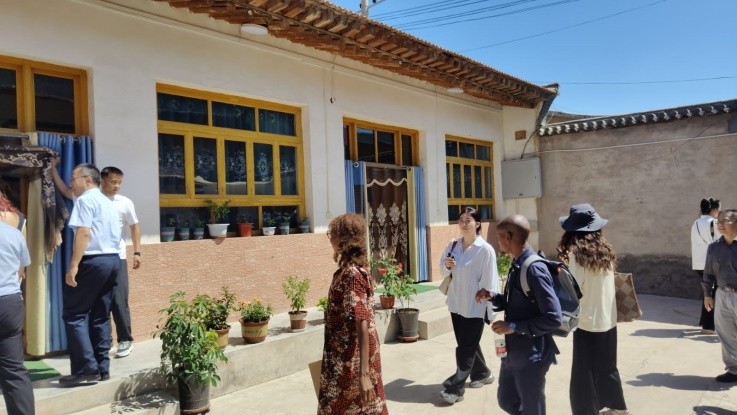
When I went to the new Bulangou Village, built a few hundred meters from the old site, I visited the first house there. It was a very large and beautiful house consisting of several rooms for sitting and sleeping, a kitchen, and a place for food storage. 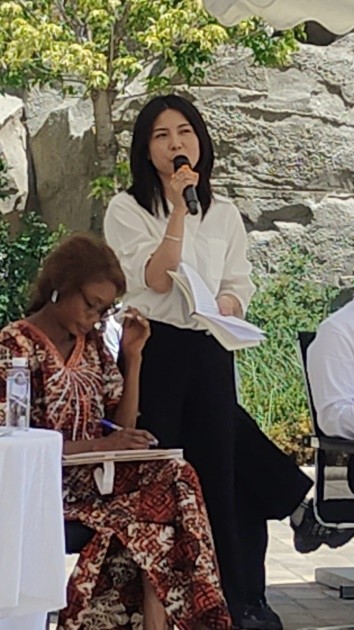
After that great change, President Xi Jinping visited the same person in his new home that he had visited in 2013, but with a vast difference in all aspects. I noticed a great difference in the features and appearance of the homeowner and the President in the first and second photos hanging on the wall of the house.
I am not just talking about electricity and paved roads surrounded by trees; what caught my attention was the presence of a water tap in the courtyard. I opened it to wash my face and found fresh, somewhat cold water. I drank from it first and then washed my face several times, and my colleagues followed suit. Then I entered to see the differences in the house furniture; I sat on a sofa to rest, and they also had a raised area inside the room similar to our traditional floor seating but furnished in an organized way.
In new Bulangou, there is now a modern paved road. Development was not limited to roads; thanks to the breathtaking natural scenery, the area has become a tourist sector, and I saw dozens of families visiting the area in their private cars. 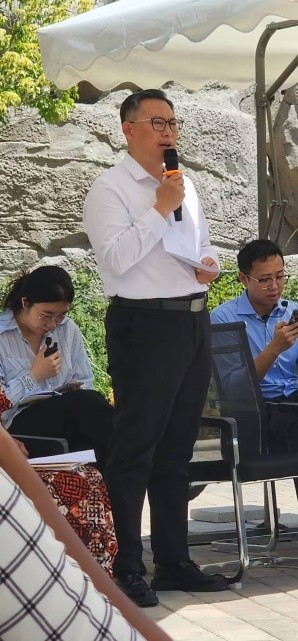
What also caught my attention was a group of beautiful children who greeted us in English when we got off the bus. We thanked them and asked: “How do you speak English so well?” They said: “In school.” There, I realized that the focus on the education sector was the major starting point in this transformation. While they previously could not study more than three primary stages, they now study the Chinese language until the ninth basic grade and even learn English. The government bears all the costs of education and food, and the village has been linked to the world via 4G and 5G internet networks. Along with learning these two languages, the children of the Dongxiang nationality have maintained their own language inside their homes, which differs from standard Chinese.
When it was time for lunch, they said we would eat at the village restaurant belonging to the school. I thought it would be a simple place, but when we arrived by bus, I found a large, touristic restaurant where many employees work. What is special about this restaurant is the presence of a special hall where all the village’s products are displayed for visitors and tourists for sale, designed like a beautiful supermarket. The products were not only agricultural but also included handicrafts.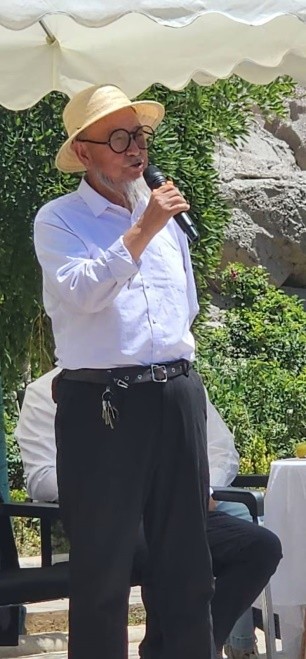
Before we left, the people of the village bid us farewell in a beautiful square amidst nature with applause, thanking us for coming to witness this great Chinese victory over poverty. Despite all these changes, they did not abandon their traditional clothes and maintained the environment and nature of their village. There, a group of men and women recounted their bitter stories with poverty; some told stories of survival below the poverty line, some about the hardship of work and roads, some about painful experiences in raising children, and some about unemployment. Then administrative officials spoke about how the government was able to transform this philosophy from thought into field application.
Now, Bulangou Village in the Dongxiang region of Gansu Province has witnessed a radical change that we can describe as being “from zero to one hundred.” When you look at the roads, you feel it is an engineering revolution that created modern paved roads over mountain peaks, known as the “Great Canyon” tourist road, which connects the village to Lanzhou city and commercial centers. Many tunnels have also been created through the mountains to facilitate the movement of tourists and trucks. As for livestock and agriculture, they are now at high production levels, and they have a famous type of meat known as “Dongxiang Mutton,” which is in high demand in China. They now use the latest 5G internet systems, and new schools and buildings have been provided up to the ninth grade, after which they move at the government’s expense to complete secondary and university studies in the center of Lanzhou city.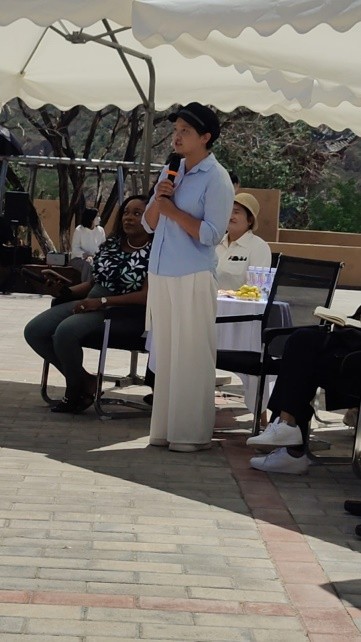
It is a great work in changing people’s lives, and I would like to point out this change through the large difference in per capita income in the village: after the annual per capita income was 1,600 Yuan, it has now become 13,120 Yuan—meaning it rose from $220 to about $1,900 USD.
They are currently utilizing a successful program called One-click Application with QR Code, which is linked to every single Chinese citizen through a massive database. This system aims to prevent them from falling back into poverty while ensuring the monitoring, improvement of living standards, and fulfillment of the people’s essential needs.
My experience in China has taught me that the success from zero to one hundred is not just a slogan, but the result of strong political will, scientific planning, and a philosophy that puts the human being at the center of development. Bulangou is not just a village; it is a global laboratory to prove that poverty is not an inevitable fate, but can be ended with science and justice.


